
Sticker Doll DIY Dressup Diary
The Fashion ValleyRole Playing
3.747.00 Reviews
- Version
- 0.0.26
- Installs
- 10.00M
- Age Rating
- Everyone
Screenshots

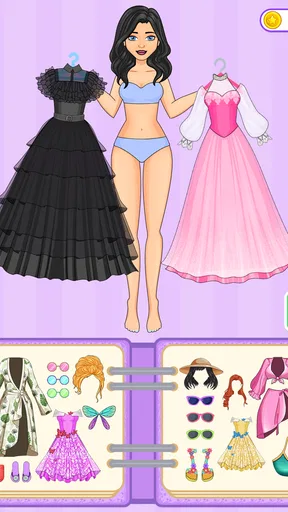
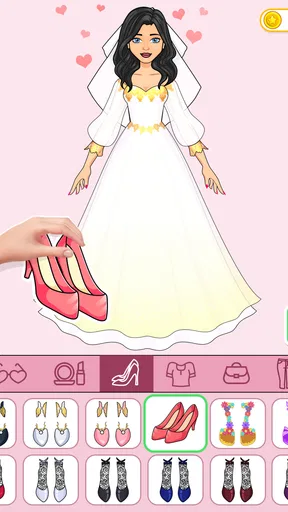

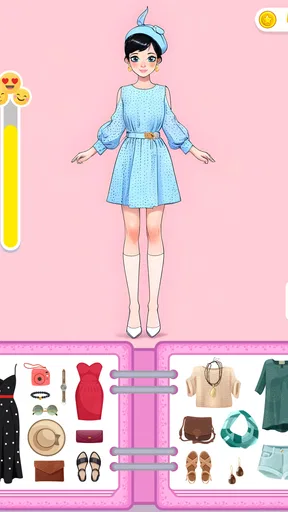
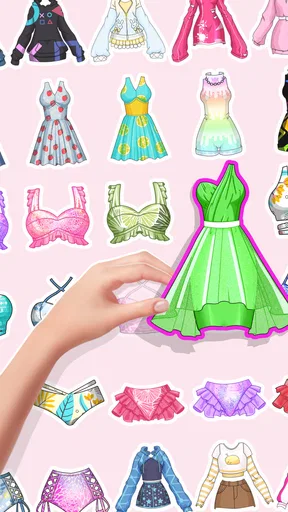
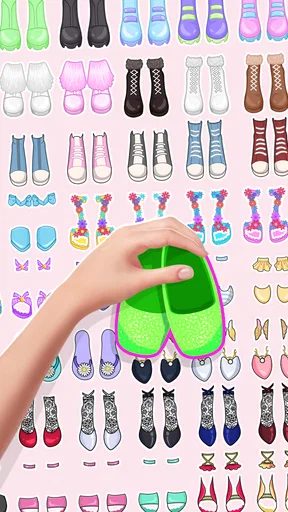

Our Review of Sticker Doll DIY Dressup Diary
 Analysis by Appyee
I spent time with Sticker Doll DIY Dressup Diary as a casual role-playing game built around creating looks for a paper-style college character. Its basic appeal is easy to understand: you choose stickers, combine clothing and accessories, and turn a simple doll into a look that feels personal. I found it most enjoyable in short sessions, especially when I wanted something creative and low-pressure rather than a game with difficult battles, timers, or complicated objectives.
The game is free to download, and its Everyone age rating makes it approachable for a broad audience. That does not mean every player will enjoy it equally. Someone looking for deep role-playing systems, a large story, or competitive progression will probably find the experience too lightweight. For children, siblings, or adults who enjoy dress-up games, though, it offers a simple shared activity that can work well on a household device.
How the dress-up idea works in everyday play
The central activity is styling a paper doll with a college-themed look. I approached each session less like a traditional game and more like a small creative project: pick a general mood, assemble the outfit, adjust the details, and decide whether the finished character looks coordinated. The sticker format gives the experience a scrapbook quality, which separates it from dress-up games that aim for realistic fashion photography or highly detailed character customization.
That simplicity is one of its strongest qualities. I did not need to memorize controls or understand a long tutorial before making something. The game’s store summary describes the experience as a way to “stick, glam and slay” a paper doll college look, and that captures the playful direction without requiring the player to take the role-playing label too seriously. Here, role-playing is mainly about expressing a character through appearance rather than making complex choices that reshape a story.
A useful way to play is to start with one anchor item instead of tapping through everything at random. I might choose the main clothing piece first, then match the hair, shoes, and accessories around it. This makes the result feel intentional and also helps when a younger player is overwhelmed by too many visual choices. Another good approach is to create contrasting looks, such as a relaxed campus outfit followed by something more polished, and compare which combination communicates the character better.
The sticker approach also makes the game suitable for quick creative breaks. I could imagine opening it while waiting for an appointment, during a quiet part of an afternoon, or when sharing a tablet with a child who wants to make something without learning a complex game. It is not the sort of title I would choose for a long uninterrupted evening unless I was especially interested in experimenting with multiple outfits.
Why it works well on a shared household device
On a shared phone or tablet, the game has a natural advantage: the main activity is visible and easy to understand. A parent, sibling, or friend can look at the screen and immediately participate by suggesting colors, choosing an accessory, or deciding which finished style is more convincing. That creates a simple form of coordination without needing everyone to understand a separate account, team, or competitive ranking.
I would use it in a household by taking turns with a clear goal. One person chooses the outfit theme, another selects the hairstyle, and a third makes the final accessory decision. This keeps the session from becoming a struggle over every tap. It also turns the game into a conversation about matching and personal taste rather than a race to finish first.
There is a practical trade-off here. A shared device is convenient, but the game should not automatically be treated as a private space for every family member. If several people use the same installation, I would agree beforehand on whether finished looks are simply temporary experiments or whether someone wants to keep a particular creation. The game’s appeal is visual and immediate, so it is easy for one person to change the screen while another is still deciding what they like.
For that reason, I recommend a small household routine: let each player complete one look before handing over the device, and take a screenshot outside the game only if everyone agrees that the result is worth keeping. That workflow avoids confusion about whose design is being edited and makes the shared experience feel fair without assuming the game offers separate family profiles or built-in turn management.
Setting boundaries before spending or sharing the device
Although the game is free, it includes in-app purchases ranging from $0.99 to $5.99 per item. That matters more in a shared-device setting than it might during solo play. A child may see an appealing styling item and assume that tapping it is part of normal play, while the person responsible for the device may view the purchase differently. I would establish that expectation before handing over the phone or tablet.
The simplest boundary is verbal: decide who is allowed to make purchases and whether any purchase is allowed at all. If the device belongs to several people, I would also avoid leaving payment decisions to whoever happens to be playing. The game is centered on collecting and combining visual elements, so optional items can feel tempting even when the basic creative activity is already enough.
This is also a good reason to keep the game’s role clear. It is a free casual title with optional paid items, not a household shopping activity. A child can still enjoy choosing colors, arranging a look, and comparing styles without being promised every available piece. If the player becomes focused mainly on obtaining more items, I would pause and decide whether the game is still serving its original purpose.
Another boundary concerns time. The game’s low-pressure format makes it easy to say “just one more look,” especially when two people are collaborating. I found that setting a simple stopping point worked better than relying on willpower. For example, a shared session can end after each person has created one outfit. This keeps the activity pleasant and prevents a quick dress-up game from taking over the whole evening.
Coordination is the real multiplayer-like strength
I would not describe the experience as a substitute for a conventional multiplayer role-playing game. Its strongest social quality comes from cooperation around the same screen, not from formal online interaction. One person can act as the stylist, another as the critic, and another as the person who makes the final selection. That makes the game especially approachable for people who do not usually play games together.
In my experience, the best conversations came from specific prompts. Instead of asking, “What should we choose?” I would ask, “Should this character look ready for class or ready for a campus event?” That small change gives the styling process direction. It also helps younger players explain their choices, which is more engaging than simply tapping through every available option.
A second useful method is to separate creation from judging. Give one player a few minutes to make a look without interruption, then let the others describe what they notice: the most eye-catching item, the best color match, or the detail that makes the outfit feel complete. This avoids the common shared-device problem where several people give instructions at once and nobody feels responsible for the finished result.
The limitation is that the game’s social value depends heavily on the people in the room. If you want built-in competition, online matchmaking, or a persistent shared world, this is the wrong choice. It works better as a visual activity that happens to be easy to share. That distinction is important because the role-playing category might otherwise suggest more character development or social depth than the dress-up format actually provides.
Age context and trust when children are involved
The Everyone rating makes the game suitable for a wide age range, and the visual concept is easy for a child to grasp. I would still treat age ratings as a starting point rather than a replacement for supervision. The relevant questions in a household are less about whether the basic dress-up idea is understandable and more about whether the child knows which taps are creative actions, which actions may involve purchases, and whether the device is shared with older users.
For a younger player, I would demonstrate the basic loop first and then watch one complete session. That quickly shows whether the child can navigate comfortably and whether the available styling choices are being used creatively or simply tapped at random. It also gives the adult a chance to explain the household rules without turning the game into a lecture.
Trust matters in both directions. A child may need permission before changing a look that a sibling created, while an adult may need to trust that the child understands the spending boundary. Because the game is visually inviting, I would not assume that a player can automatically distinguish between a decorative option and a paid one. Clear language works better than vague instructions such as “be careful.”
I also like that the game can support conversation without demanding personal information from the child as part of the activity. Still, I would keep the device itself under the usual household supervision, particularly if it is used by several people. The safest approach is not to invent controls the game may not have, but to use ordinary family habits: shared expectations, an adult-approved device, and a clear rule about purchases and saving or sharing creations.
What changes between solo play and family play
When I played alone, I cared more about refining a coherent style. I could test an unusual combination, remove pieces, and start again without needing to explain the decision. Solo play is therefore better for someone who enjoys visual experimentation and wants to work at their own pace.
With another person, the goal changes. The most enjoyable part becomes the discussion around the look: why one accessory fits, why another clashes, and whether the character feels consistent with the chosen college setting. A child and adult can enjoy the same session for different reasons, with one focusing on colors and the other on creating a recognizable theme.
That difference also reveals a weakness. If you prefer games that reward mastery, planning, or measurable improvement, the dress-up loop may feel repetitive once the novelty of the sticker collection wears off. The game is better at encouraging expression than at providing a demanding challenge. I would recommend it to a friend who likes making visual choices, but not to someone asking for a substantial role-playing campaign.
How it compares with familiar alternatives
Compared with a traditional role-playing game, this title removes most of the pressure. There is no need to learn a combat system or manage a complicated character build to enjoy the main activity. That makes it a gentler option for casual players and shared sessions, but it also means there is less narrative weight and less strategic depth.
Compared with a conventional fashion or avatar game, the paper-doll presentation gives it a more hands-on, collage-like personality. The focus is not simply on making a character look realistic. It is on assembling a styled page through stickers and visual combinations. Players who enjoy digital scrapbooking may respond to that immediately, while players who want detailed body customization or realistic clothing simulation may prefer another type of dress-up game.
Compared with a drawing app, it offers more structure because the player is working with a defined character and a clear styling theme. The trade-off is freedom: you are arranging the game’s available elements rather than drawing every part yourself. I see that as a strength for children or casual users who want creative direction, but a limitation for anyone who wants complete artistic control.
The game’s current version is 0.0.26, and it runs on devices using Android 8.0 or later. Those details make it relevant for households that keep an older compatible phone or tablet available for casual use. I would still check the device experience personally before making it the main shared activity, because a game that looks simple can feel less comfortable on a small screen or an older device.
Who should try it, and who should skip it
I think it is a good fit for players who enjoy styling characters, arranging visual details, and making quick creative decisions. It is especially suitable for a child and adult who want a calm activity they can discuss together, or for siblings who can take turns without needing a competitive ruleset. It also suits adults who like casual fashion games but do not want a demanding progression system.
I would skip it if your main goal is a deep story, complex role-playing choices, online interaction, or a strong sense of achievement earned through difficult challenges. I would also be cautious about installing it on a device used by several children if the household has not agreed on purchase rules. The free entry point is helpful, but the optional item prices mean that shared use requires a little planning.
My most practical tip is to decide on a theme before opening the wardrobe. “First day on campus,” “rainy afternoon,” or “special event” gives the session a creative target and makes the available choices feel more meaningful. A second tip is to build from one standout item and keep the remaining pieces restrained. That usually produces a more readable look than selecting every attractive sticker at once.
A third tip is to use the game as a conversation starter rather than a silent distraction. Ask the player to explain the character’s mood or destination, then let them revise one detail based on that idea. This adds role-playing flavor without pretending the game offers a large branching story. It is a small adjustment, but it makes the paper-doll format feel more purposeful.
My household verdict
Sticker Doll DIY Dressup Diary is a focused, accessible dress-up game from The Fashion Valley. It has reached over ten million installs and holds a 3.7 average from around eleven thousand ratings, which suggests a sizable audience while also reminding me that the simple format will not satisfy everyone. I would treat those figures as context rather than a guarantee: the right question is whether you want a sticker-based styling activity or a fuller role-playing experience.
For a household, I see its best use as a short, supervised creative session on a shared device. Set the purchase rule first, agree on turns, and give each player a clear styling challenge. Those steps address the main practical issues without requiring features the game may not provide. The Everyone rating makes the concept approachable, while the free download makes trying it easy, but adult guidance is still sensible when children share a device.
My final recommendation is positive but specific. I would suggest it to a friend who wants a relaxed paper-doll styling game, especially one that can become a small family or sibling activity. I would not present it as a deep role-playing adventure or as a replacement for a competitive multiplayer title. Its value comes from quick visual creativity, easy coordination, and the pleasure of turning a few styling choices into a character with a distinct look.
If you approach it as a shared creative toy rather than a full-scale RPG, its strengths become much clearer. The optional purchases and potentially repetitive dress-up loop are real limitations, but they are manageable when expectations are set early. For the right player, that balance makes this a pleasant free game to keep available for short styling sessions, casual experimentation, and low-pressure time together.
Verdict
Strengths of Sticker Doll DIY Dressup Diary
- Creative sticker-based customization encourages imaginative outfit design.
- Large mix of clothing, accessories, hairstyles, and decorative items.
- Relaxed gameplay works well for short sessions and casual players.
- Diary-style pages give creations a personal scrapbook-like presentation.
- Simple touch controls are easy for children and first-time players.
Limitations of Sticker Doll DIY Dressup Diary
- Some clothing and sticker items may require ads or in-app purchases.
- Repeated decorating tasks can feel limited after extended play.
- Ads may interrupt the design process, especially between activities.
- Fine details can be difficult to place accurately on smaller screens.
- The app may need substantial storage for its visual assets and updates.
Other Releases by The Fashion Valley
View All
Icecream Cone Cupcake Baking
Strategy3.2

Complete Puzzle: Draw One Part
Puzzle4.7

Mini Fidget Antistress Games
Casual4.5

Cake Maker DIY: Baking Games
Role Playing4.6
Similar Picks in This Category
View All
Hair Dye
CrazyLabs LTD4.4

Monster High™ Beauty Salon
CrazyLabs LTD4.5

Bus Simulator - Bus Games 3D
Jima Apps4.4

Flight Pilot: 3D Simulator
Wildlife Studios4.1


Super Stylist Fashion Makeover
CrazyLabs LTD4.4
Frequently Asked Questions
What is Sticker Doll DIY Dressup Diary?
Sticker Doll DIY Dressup Diary is a creative dress-up and decorating game focused on making personalized characters and diary-style scenes. You can choose dolls, hairstyles, outfits, accessories, stickers, backgrounds, and decorative elements, then arrange them to create your own visual stories. It is designed for casual play, so there is no complicated tutorial or demanding strategy system to learn.
How does the gameplay work in Sticker Doll DIY Dressup Diary?
The main gameplay revolves around customization rather than competition. You select a doll or character, change its appearance, and combine clothing and accessories to match different themes or moods. After dressing the character, you can decorate a scene or diary page with stickers and backgrounds. The drag-and-drop controls are simple, making the game approachable for younger players and anyone who enjoys relaxing creative activities.
Is Sticker Doll DIY Dressup Diary free to download and play?
The game can generally be downloaded without an upfront purchase, but the available content may include optional in-app purchases, advertisements, or both, depending on the version and platform. Some clothing items, stickers, or decorative features may require unlocking. Before downloading, it is worth checking the current store listing for pricing, advertising details, and any purchase restrictions, especially if children will be using the app.
Does Sticker Doll DIY Dressup Diary require an internet connection?
Many of the basic dress-up and decorating activities may be available offline once the game has been installed, which makes it suitable for short creative sessions while traveling. However, advertisements, updates, cloud-related features, or additional content may require an internet connection. Offline availability can vary between versions, so you should not assume that every feature will work without Wi-Fi or mobile data.
Is Sticker Doll DIY Dressup Diary suitable for children?
Sticker Doll DIY Dressup Diary is generally suitable for children who enjoy fashion, character design, stickers, and imaginative storytelling. The controls are uncomplicated and the gameplay does not usually involve combat or stressful time limits. Parents should still review the app’s age rating, advertising, in-app purchases, and privacy information before installation, since store ratings and available features can differ between Android and iOS versions.
Play our best games!


